
PG PUP
Keeping Pets and People Together
History is Made!
Prince George's County Council voted to remove breed specific legislation and strengthen laws to improve safety through tighter leash laws, increased penalties for offenders, increased education and a pilot program to allow "terrier" dogs to be adopted, fostered and owned in Prince George's County.
.jpeg)
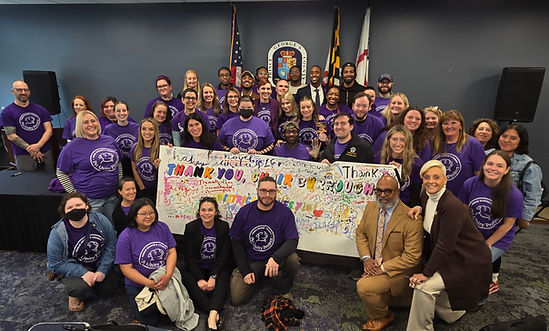
PRINCE GEORGE’S COUNTY, Md. (Nov. 18, 2025) - The Prince George’s County Council in Maryland voted in favor of ending the decades-old ban on pit bull-type dogs in the county. Council Bill 097-2025, a comprehensive modernization of the county’s animal control code was championed by Council Chair Edward Burroughs III and represents years of collaboration between local leaders, animal advocates and residents to create a fairer, safer and more effective animal control code.
"Today marks a monumental step forward for our county. This legislation not only prevents the inhumane euthanasia of countless dogs who pose no threat but also makes our communities safer by strengthening protections for residents against genuinely dangerous dogs,” said Burroughs. “By increasing accountability, raising civil penalties, and expanding both the definition and requirements for classifying a dog as dangerous, we are taking a comprehensive approach to responsible pet ownership. This legislation holds irresponsible dog owners accountable, ensuring that the focus remains on behavior, not breed.”
Leading the effort was Prince George’s Pet Unity Project, a grassroots organization that brought together residents, animal advocates and local officials to identify how the animal control code could strengthen families, address the community’s concerns and improve public safety. Under the prior law, most pit bull-type dogs entering the county's animal shelter were automatically deemed unadoptable due solely to appearance. Countless dogs were confined to kennels for months, unable to be adopted or even taken outside. Persistent advocacy from shelter volunteers and PG PUP gradually opened small but meaningful doors. Official policy changes made by shelter leadership first allowed staff and volunteers to handle them, then to walk them, bringing moments of care and normalcy to lives spent in limbo. Major progress was made when rescues were permitted to transfer these dogs safely outside the county, and a federal court challenge shed light on the broader harms of breed-specific laws. By early 2023, out-of-county adoptions were finally permitted, providing many of these dogs with their first real chance at a home.
Through community engagement across the county, PG PUP gathered first-hand stories from residents about how the outdated code affected their lives and their pets. These incremental changes laid the groundwork for today’s repeal, driven by residents across the county. “We are thrilled to see this long-awaited change,” said Caitrin Conroy, executive director of the Prince George’s Pet Unity Project. “For years, residents have called for fair, effective laws, and this outdated policy has cost our community dearly in reputation and resources, in trust, and in lives. It has strained our animal services system and blocked meaningful progress. The Council’s vote shows real leadership, grounded in facts, evidence, and compassion, rather than fear and myths. At the Prince George’s Pet Unity Project, our mission has always been to help keep people and their pets together through support, education, and access to resources. We look forward to continuing to work together to build a safer, fairer community for everyone.”
Key Provisions of CB-097-2025:
-
Public Safety: The modernized code strengthens leash-law requirements, updates and clarifies definitions, and increases civil penalties for repeat offenders.
-
Efficient County Resource Use: Prior to these updates, the county spent millions annually on an ineffective policy with no measurable safety benefit. The changes to the animal code replace the outdated, subjective rules with today’s best practices that better utilize staff and resources.
-
Supports people and pets: The bill launches a pilot program that allows previously banned pit bull-type dogs to be adopted or fostered through the Animal Services Division. Participants must meet strict requirements to ensure public safety while giving more families the chance to welcome pets into their homes. The bill also grandfathers in dogs currently in the county, provided they are registered, and owners adhere to the county’s updated requirements.
Looking Ahead:
With CB-097-2025 now enacted, the county will move into an implementation phase that
emphasizes:
-
Public education campaigns to inform residents about the new changes, when they are effective, and available resources.
-
Continued partnerships with PG PUP, Humane World for Animals and other local groups to extend pet-care resources to families.
-
Regular progress reports to ensure transparency, accountability, and public safety. Humane World for Animals is supporting this transition by covering adoption fees for dozens of pit bull-type dogs at the Prince George’s County Animal Shelter, donating 1,000 microchips to help reunite lost pets with their families, and providing over $150,000 in in-kind assistance to help residents care for their pets.
This historic update brings Prince George’s County’s animal code in line with modern best practices, creating safer neighborhoods, stronger families and a more compassionate community for people and pets alike. The County now joins jurisdictions nationwide moving away from breed-specific laws in favor of evidence-based, equitable approaches to public safety.
Media Contacts:
Caitrin Conroy: 301-301-9970; admin@petunityproject.org
About the Pet Unity Project
The Pet Unity Project is a local nonprofit of Prince George’s County residents and volunteers dedicated to re-imagining community collaboration around animal welfare. The organization provides education, community support, and policy advocacy to repeal breed-specific legislation (BSL), guide the safe reintegration of previously banned dogs into the community, assist local shelters and adopters, and ensure pets remain with their families whenever possible while keeping communities safe.
An Overview of the Bill
Public Safety &
Accountability
-
Expanded Leash Requirements
-
All animals must be leashed (maximum 10 feet).
-
Electronic collars and retractable leashes no longer qualify.
-
-
Clear Definition of “Animal at Large”
-
Clarifies that shared areas (apartment or HOA common spaces) are not considered an owner’s premises.
-
Increases owner responsibility for securing animals.
-
-
Strict Liability for Owners
-
Owners are held directly responsible for damage or injury caused by their animals.
-
-
Strengthened Dangerous Animal Provisions
-
Recognizes prior dangerous classifications from other jurisdictions.
-
Empowers Animal Control to impound and investigate animals posing threats to the public.
-
Creates defined timelines and hearing procedures for complaints and impoundments.
-
-
Improved Interagency Coordination
-
Expands authority of Animal Control and law enforcement to act quickly when public health or safety is endangered.
-
Financial Accountability & Fiscal Impact
-
Higher Penalties to Deter Violations
-
Civil fines increased up to $3,000 for repeated serious violations.
-
Graduated fine structure ensures fair but firm enforcement.
-
-
Potential Revenue Growth
-
Increased fines and permit fees expected to raise revenues over time.
-
-
Neutral Near-Term Fiscal Impact
-
Minimal immediate cost to the County.
-
-
Efficiency Measures
-
Online training and digital reporting can reduce staff and travel costs.
-
Data collection and performance reporting required bimonthly to ensure transparency.
-
-
Indirect Financial Benefits
-
Stronger compliance reduces legal liability and the cost of responding to dangerous incidents.
-
"Pittie Pilot Program"
-
Creates a limited, county-supervised pilot to allow adoption or fostering of certain dogs through the Animal Services Division (ASD).
-
Requires permits, microchipping, spay/neuter, and a signed responsibility agreement from every participant.
-
Mandates pet parenting and safety training prior to adoption.
-
Requires owners to report escapes, bites, or ownership changes within strict timelines.
-
Allows ASD to inspect homes and revoke permits for violations.
-
Bimonthly reporting ensures public transparency and safety monitoring.
Community Benefits
-
Promotes responsible pet ownership through education and accountability.
-
Provides free education for pet fosters and adopters.
-
Enhances public safety via structured enforcement, not stigma.
-
Reduces shelter overcrowding and unnecessary euthanasia.
-
Builds trust between residents and Animal Services through transparency and data-based results.
-
Reflects a modern, compassionate approach to animal management — balancing safety, fairness, and fiscal responsibility.